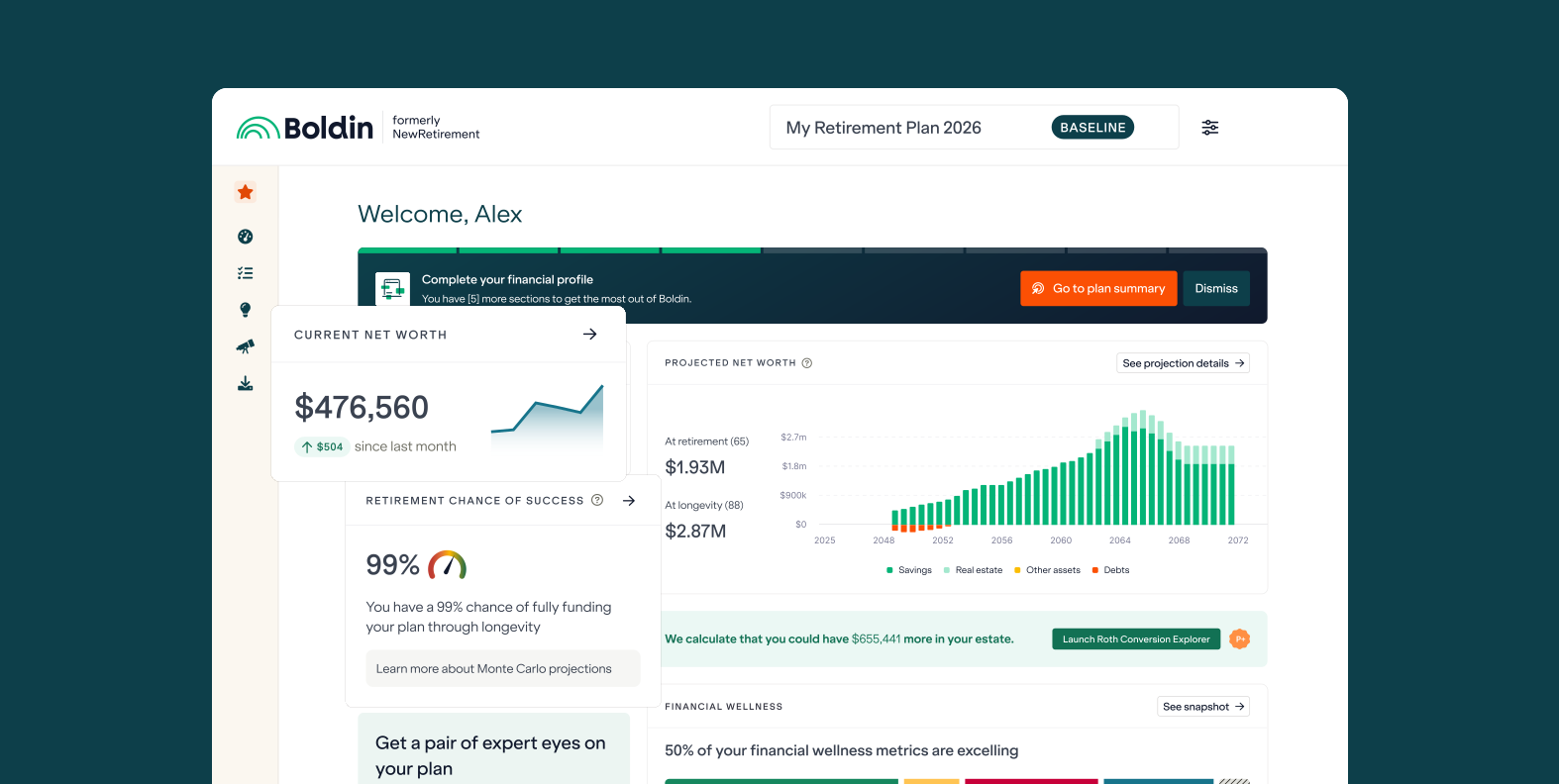
Withdrawal order
Withdrawal timing can make or break a retirement plan. Boldin’s tools were strong, but users lacked control over how their savings were drawn down. I set out to give them personalized, flexible withdrawal strategies aligned to their goals.
THE PROBLEM WE NEED TO SOLVE
How might we empower users to optimize their withdrawal order — minimizing taxes, extending savings longevity, and building trust in the plan?
Reduce churn &
increase retention
Drive subscription
growth & engagement
Armed with key user insights, I explored multiple design directions — balancing automation, user control, and ease of understanding — to best address user needs.
Users: Pre-retirees and retirees, often collaborating with advisors, who want transparency and control over their financial futures.
Business goals: Strengthen user confidence, retention, and premium upgrades by improving in-platform decision-making tools.
Key insights from feedback and support channels:
• Users wanted to choose which accounts to withdraw from first.
• Limited control over drawdown strategy reduced trust in the plan.
• Retiring users sought clear, actionable guidance for optimizing withdrawals.

“Not being able to specify funding source is a deal breaker for me..”
"Without control over the withdrawal order, it feels like I’m guessing how to manage my savings — I need more guidance and flexibility."
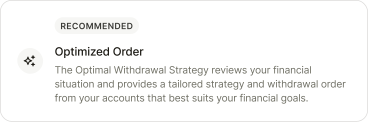
Automatically recommends the best withdrawal strategy based on financial goals.
Users would be able to select goals like:
• Lowest Lifetime Taxes
• Highest Retirement Chance of Success
• Highest Estate Value
I introduced goal-based optimization, a dynamic system powered by Boldin’s Financial Planning Engine (FPE). When a user selects a goal, the engine evaluates multiple withdrawal strategies and recommends the one that best achieves that outcome. This shifts the experience from a one-size-fits-all model to a personalized, data-driven strategy selection.
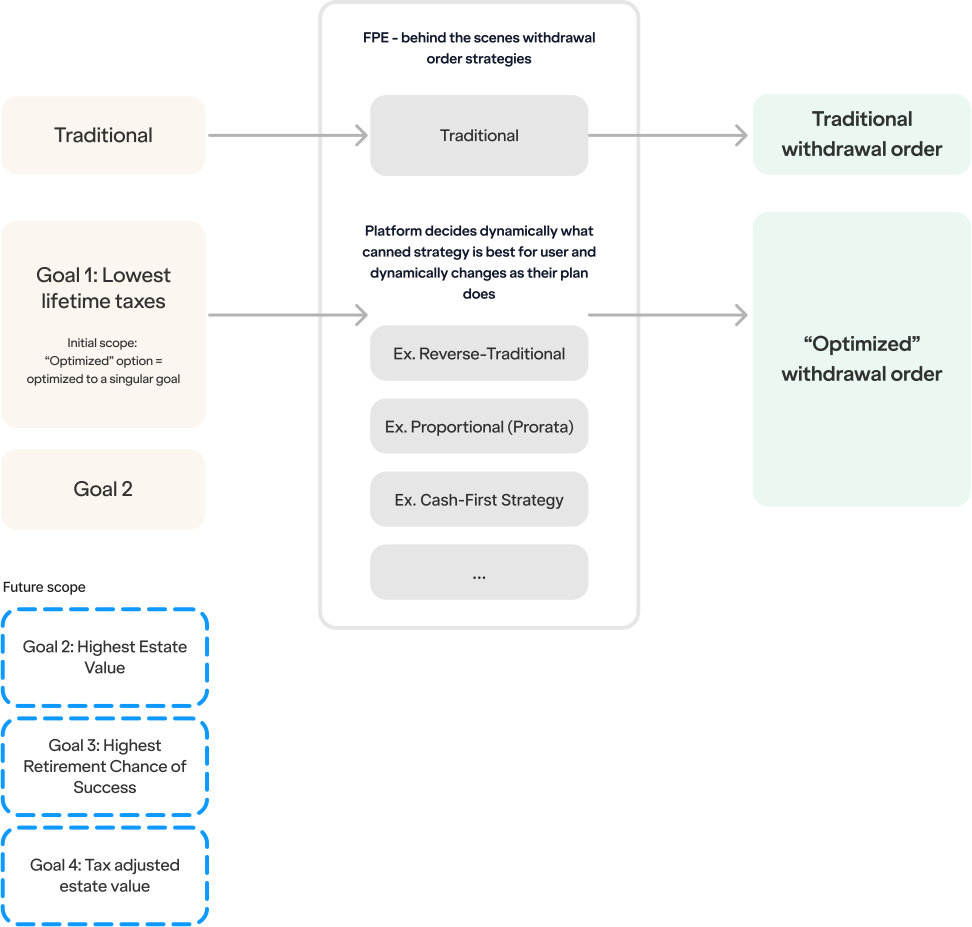
This concept helps users avoid having to pick from technical strategies like proportional, reverse traditional while still offering transparency and control.
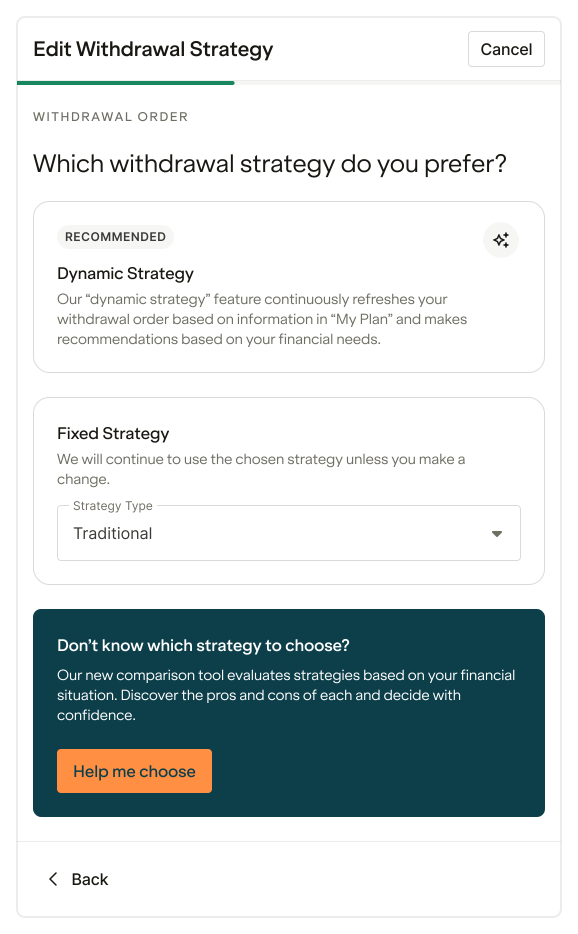
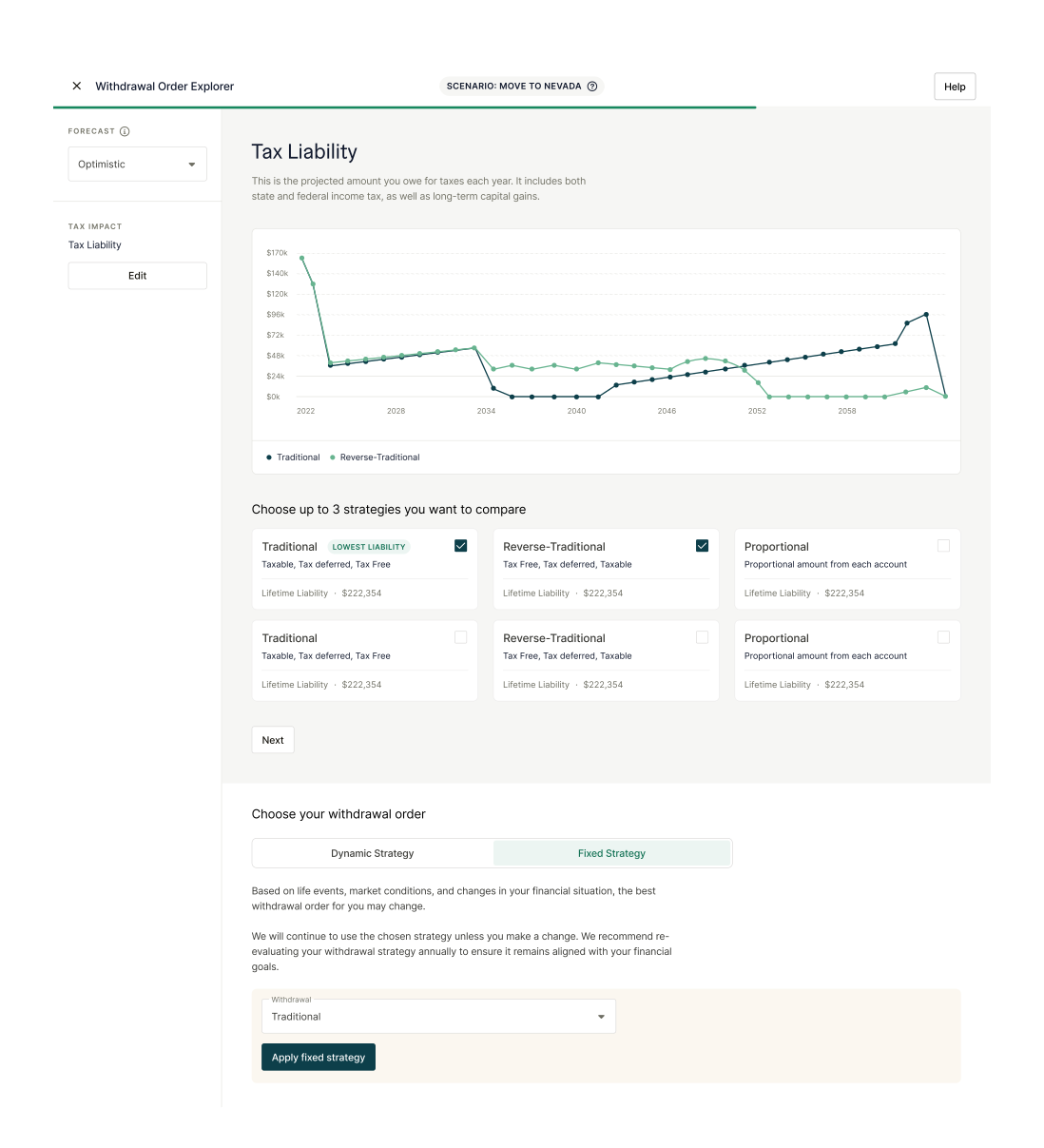
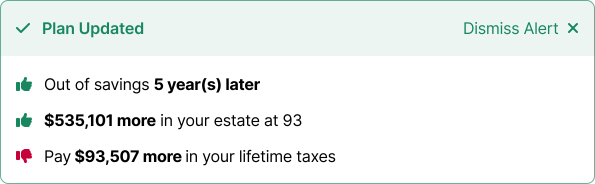
In this iteration, I wanted to explore another key idea — that some users really want to compare different withdrawal strategies side by side to see what actually works best for their goals.

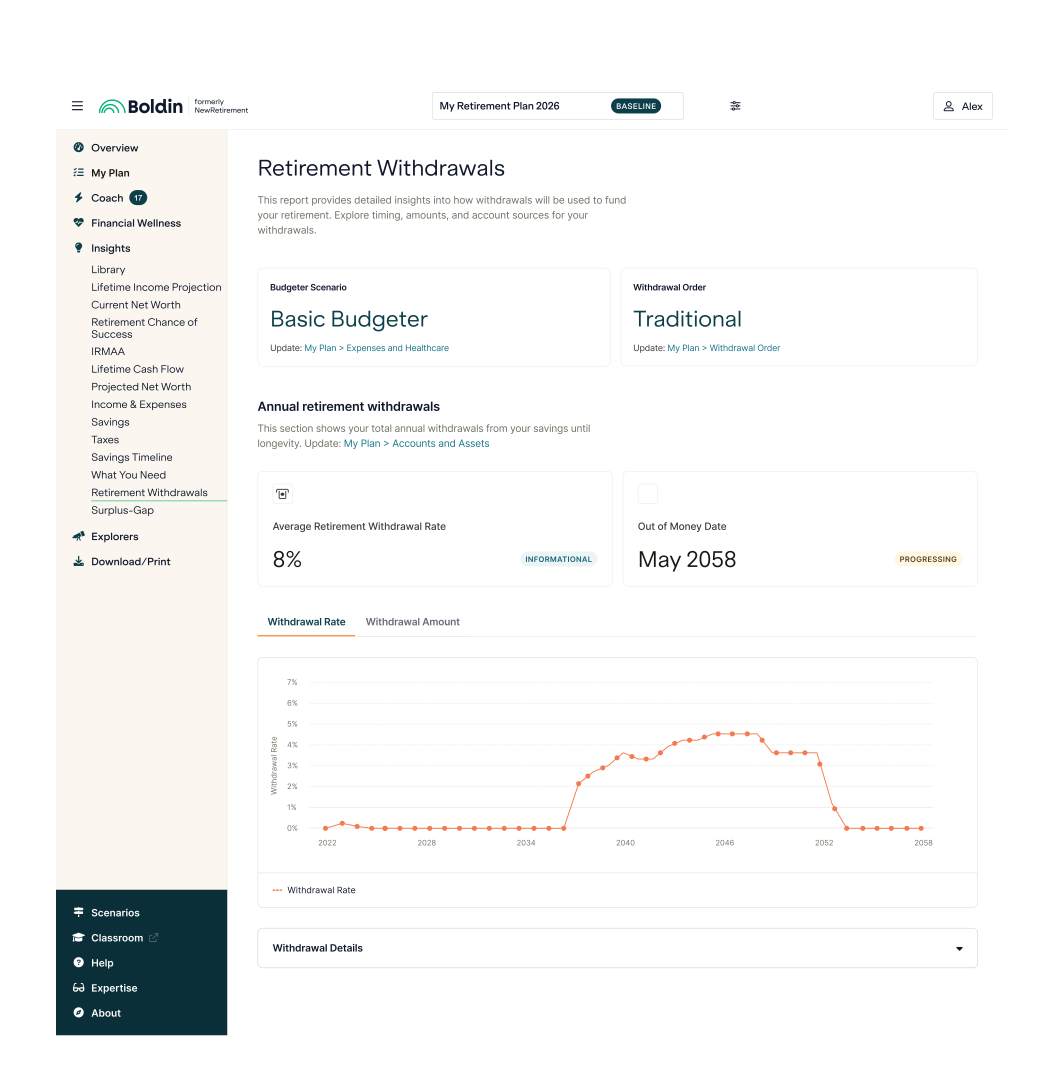
The Withdrawal Insight Report tested strongly across all sessions.
Participants quickly understood the purpose of the report and appreciated the clarity it provided around their withdrawal timelines and account drawdowns.
Key feedback themes included:
High confidence: Users felt reassured seeing a detailed breakdown of when and from which accounts their withdrawals would happen.
Perceived transparency: The visualizations helped users trust the platform's projections and strategies more fully.
Ease of understanding: Most users could navigate and interpret the report without requiring additional explanation.
Overall, the report reinforced trust, addressed key user pain points around "black box" calculations, and validated the decision to prioritize transparency and education in the withdrawal experience.
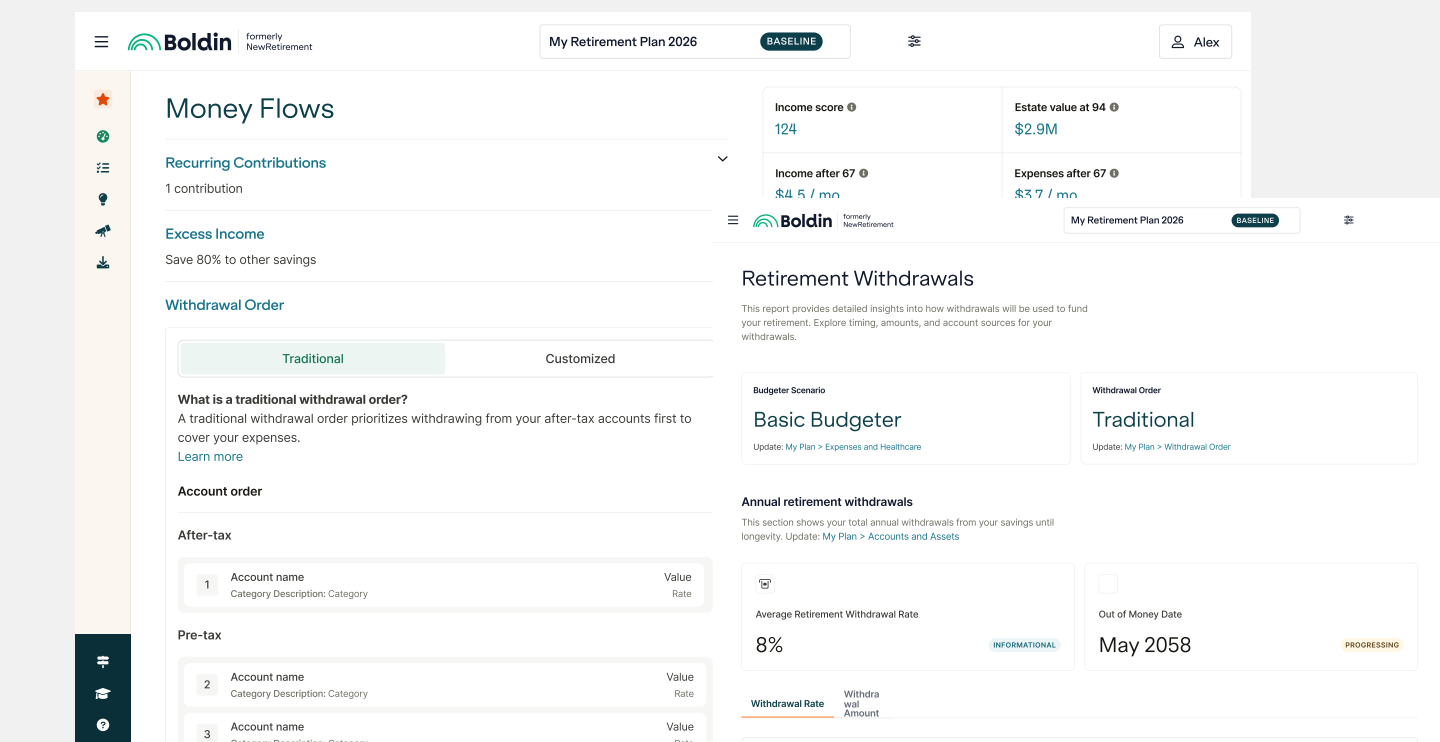
This concept let users manually prioritize and rearrange withdrawal accounts via drag-and-drop. If users understand the value of an optimized withdrawal order, they’ll be more likely to upgrade or renew.

" height="2.1187359513420594px" id="P5kIJB7Ko" transform="translate(4.268 0)" width="11.73219480873486px"/><path d="M 2.13 11.637 L 0 11.637 L 0 0 L 2.13 0 Z" fill="rgb(15, 14, 14)" height="11.636652122173734px" id="xBplekXaY" transform="translate(13.87 0)" width="2.1296344887445002px"/><path d="M 1.509 14.942 L 0 13.447 L 13.563 0 L 15.073 1.496 Z" fill="rgb(15, 14, 14)" height="14.94221869628454px" id="DEz5S9WYM" transform="translate(0 1.058)" width="15.072818848944806px"/></g></svg>)