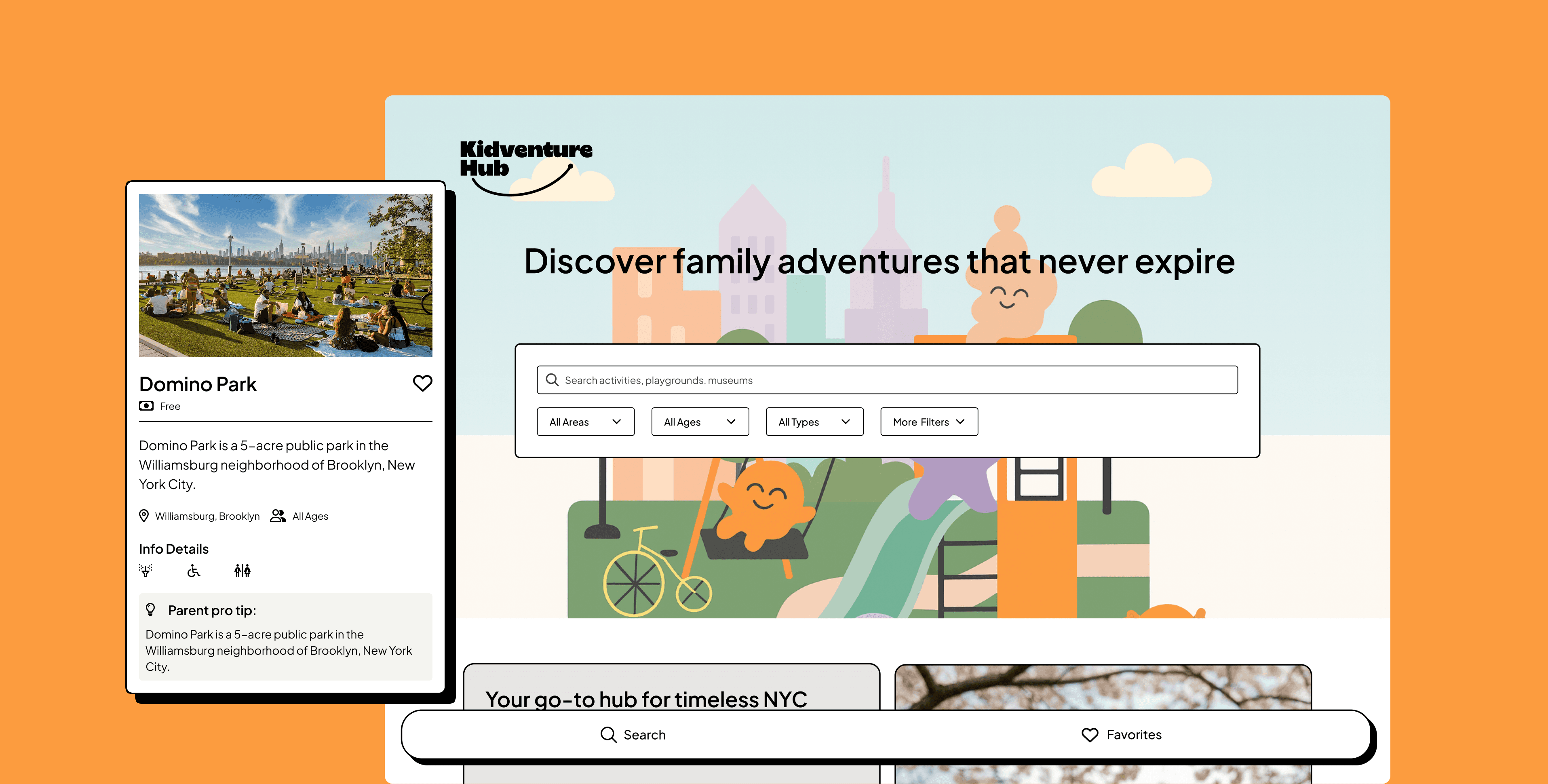
Kidventure Hub
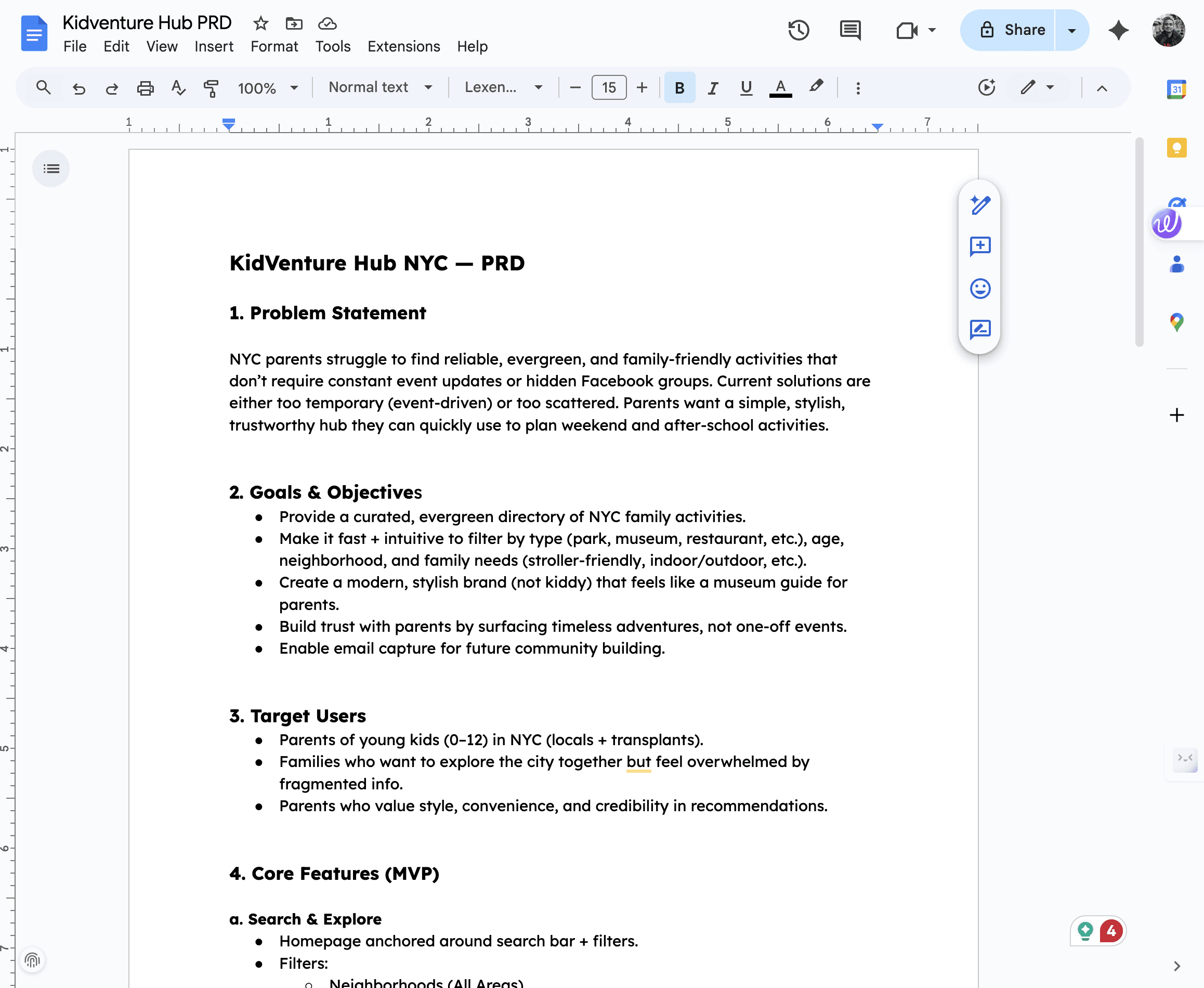
An evergreen guide for NYC families, designed and vibe-coded to reimagine how parents find, filter, and enjoy city adventures for their kids.
role
Founder
team
Sole designer and builder
A personal exploration in vibe-coded design
KidVenture Hub NYC began as a side experiment — part playground guide, part design sandbox. I wanted to build something that solved a real problem in my daily life as a Brooklyn parent, while letting me experiment freely with emerging design-to-dev workflows like Loveable.dev, Supabase, and Figma tokens.
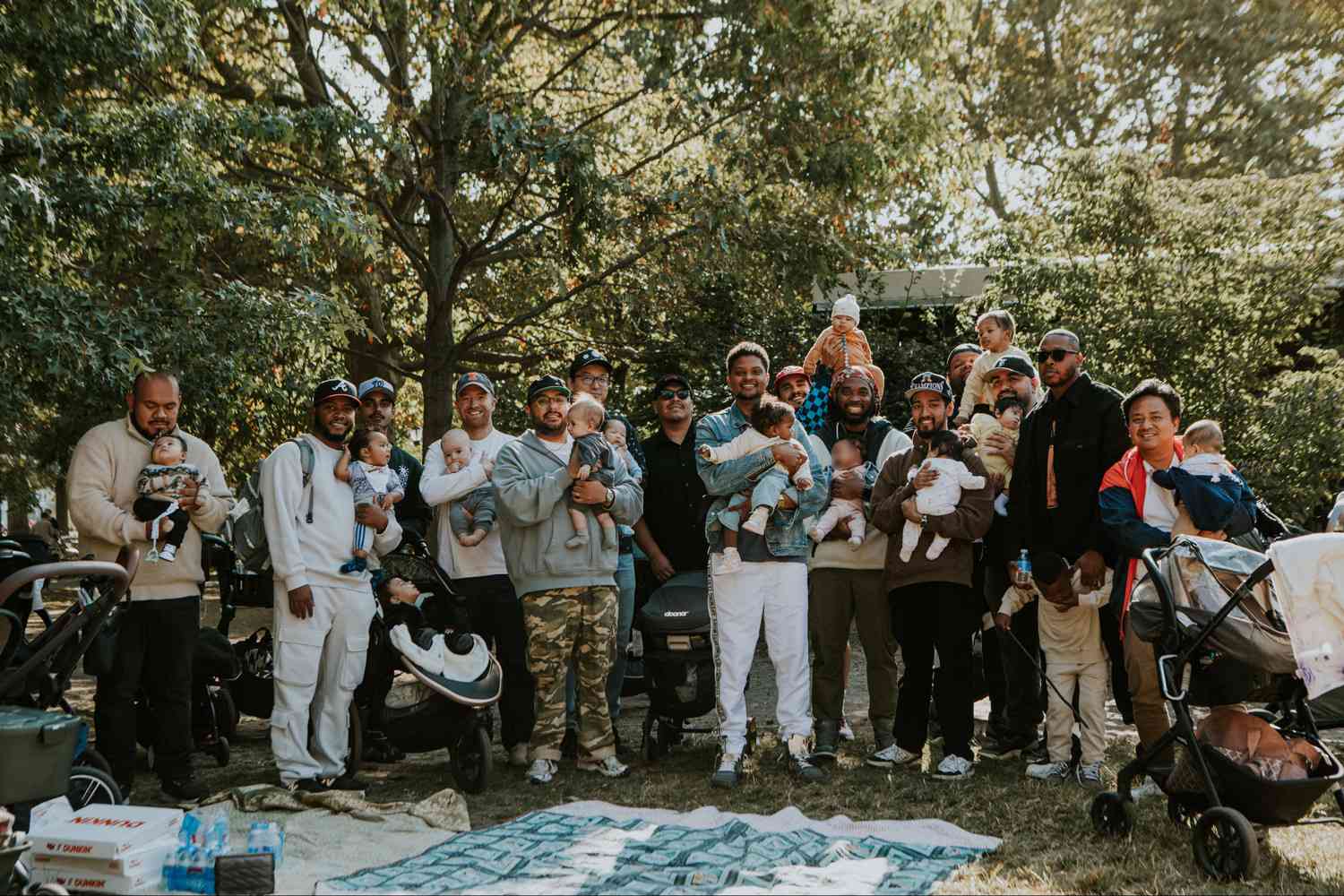
Planning weekend outings with a toddler in NYC can be surprisingly frustrating. Event-based apps constantly go out of date, while blog posts drown you in sponsored lists and half-working links.
Parents need something evergreen, a curated, trustworthy, and visually clear directory of kid-friendly spots that feels inspiring, not overwhelming.
Create a digital companion for NYC parents that blends design clarity, curation, and delight.
An web app that feels like a modern kids’ museum — tactile, bold, and beautifully organized. Not another feed — but a space that feels alive, with timeless listings and minimal upkeep.
This was my first “vibe-coded” project — where emotion, intuition, and flow led the creative process. Instead of starting with wireframes, I began with mood, rhythm, and color — shaping the interface around the feeling I wanted users to have: calm curiosity and trust. Then I layered in structure: grids, data logic, and reusable components powered by Figma variables and Supabase schemas. It became a case study in how intuition can be the entry point to precision — a bridge between artistry and engineering.
Behind the expressive UI, I built a light but extensible system:
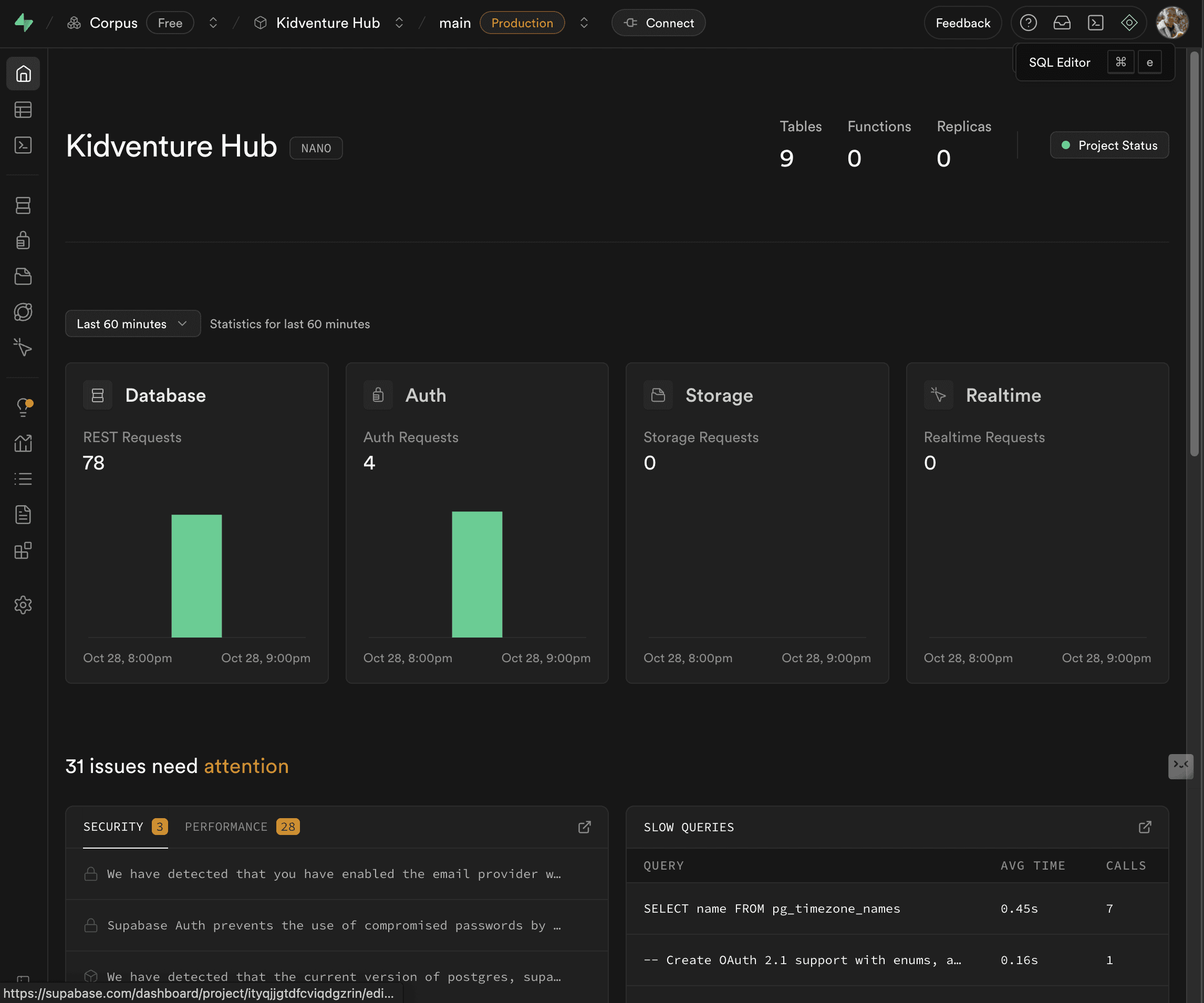
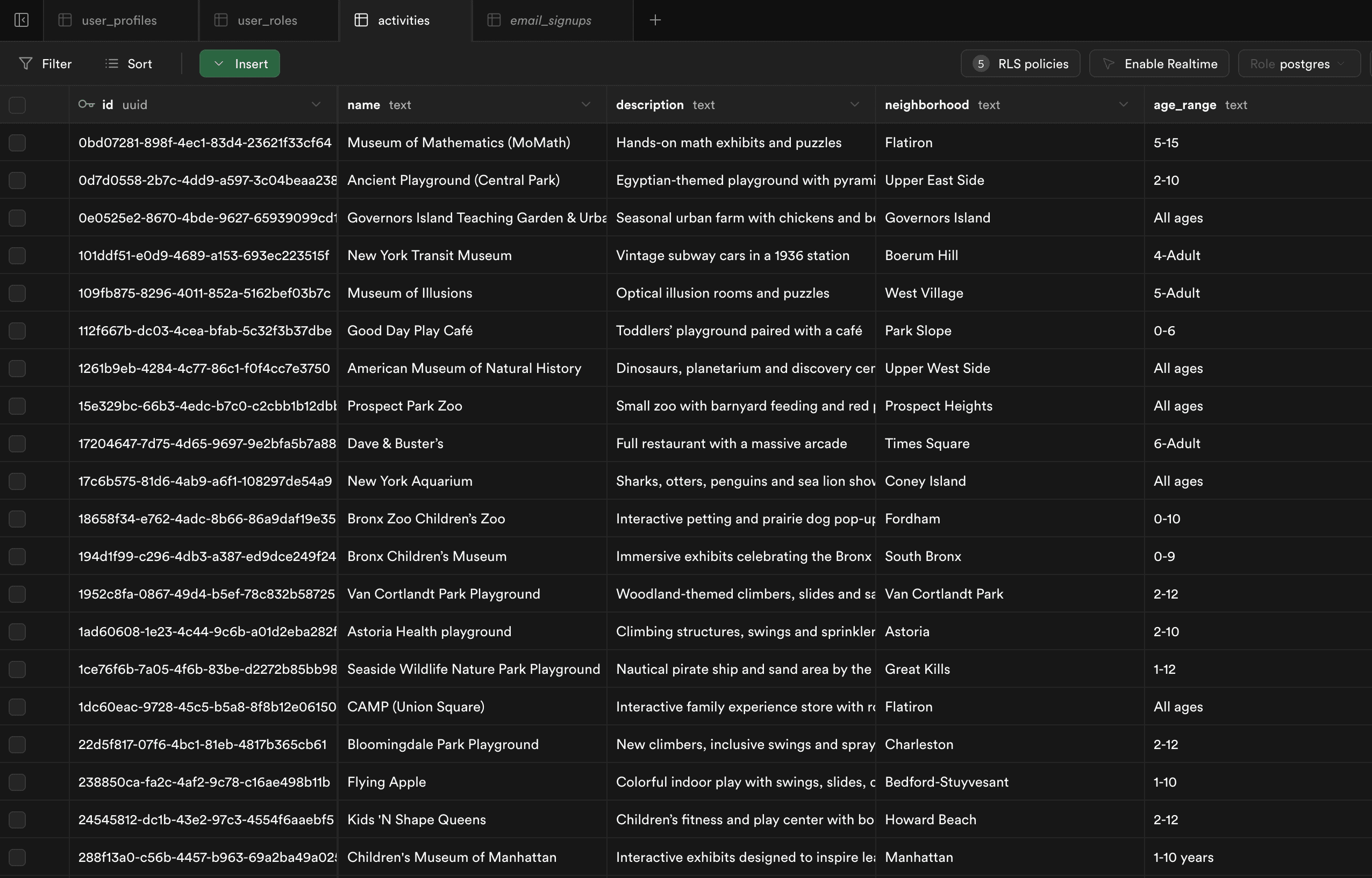
• Supabase as the database for 100+ listings
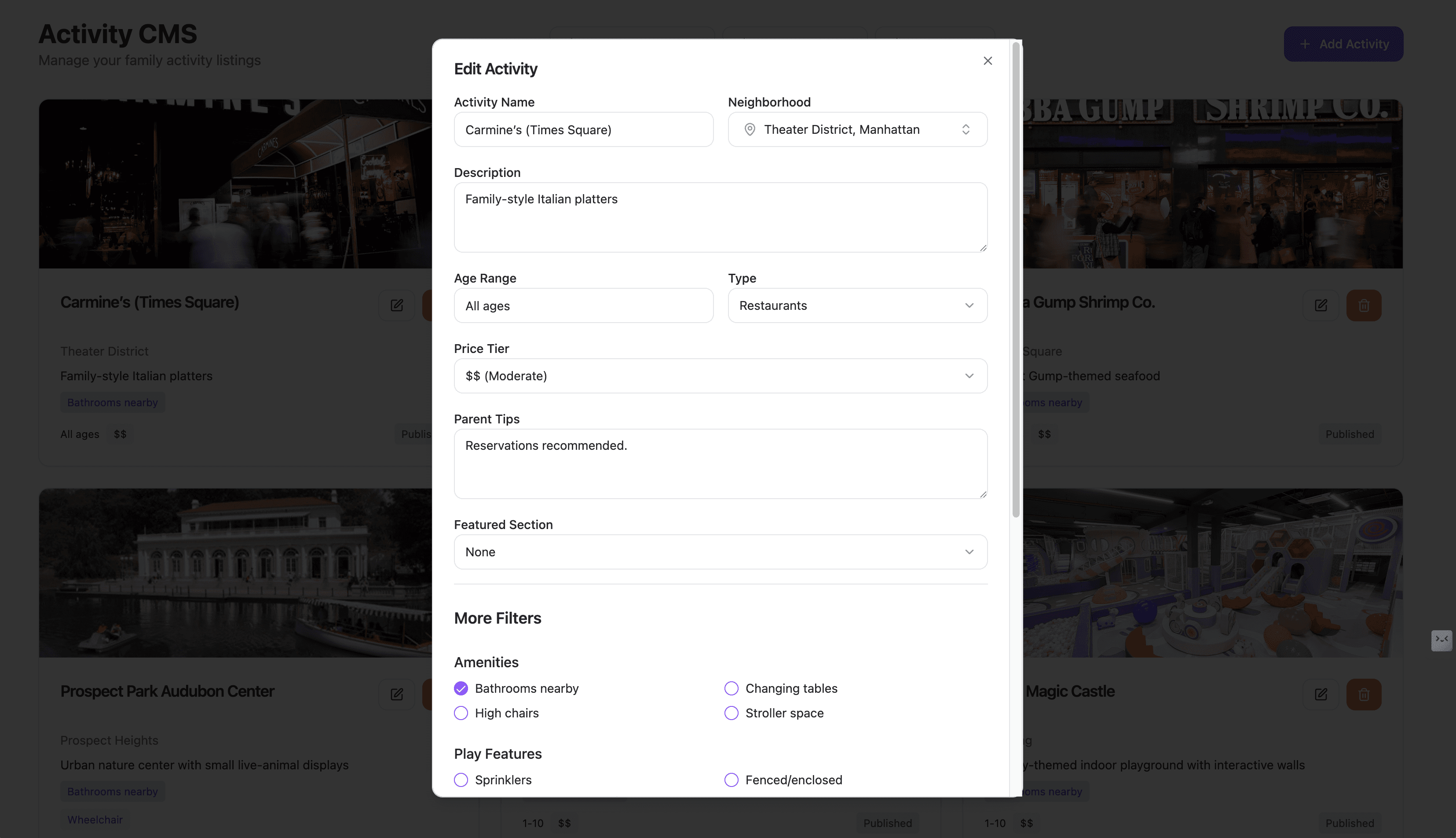
• Amenity filters structured as JSON arrays (e.g. bathrooms, sprinklers, stroller access)
• Figma tokens driving consistent typography and color semantics
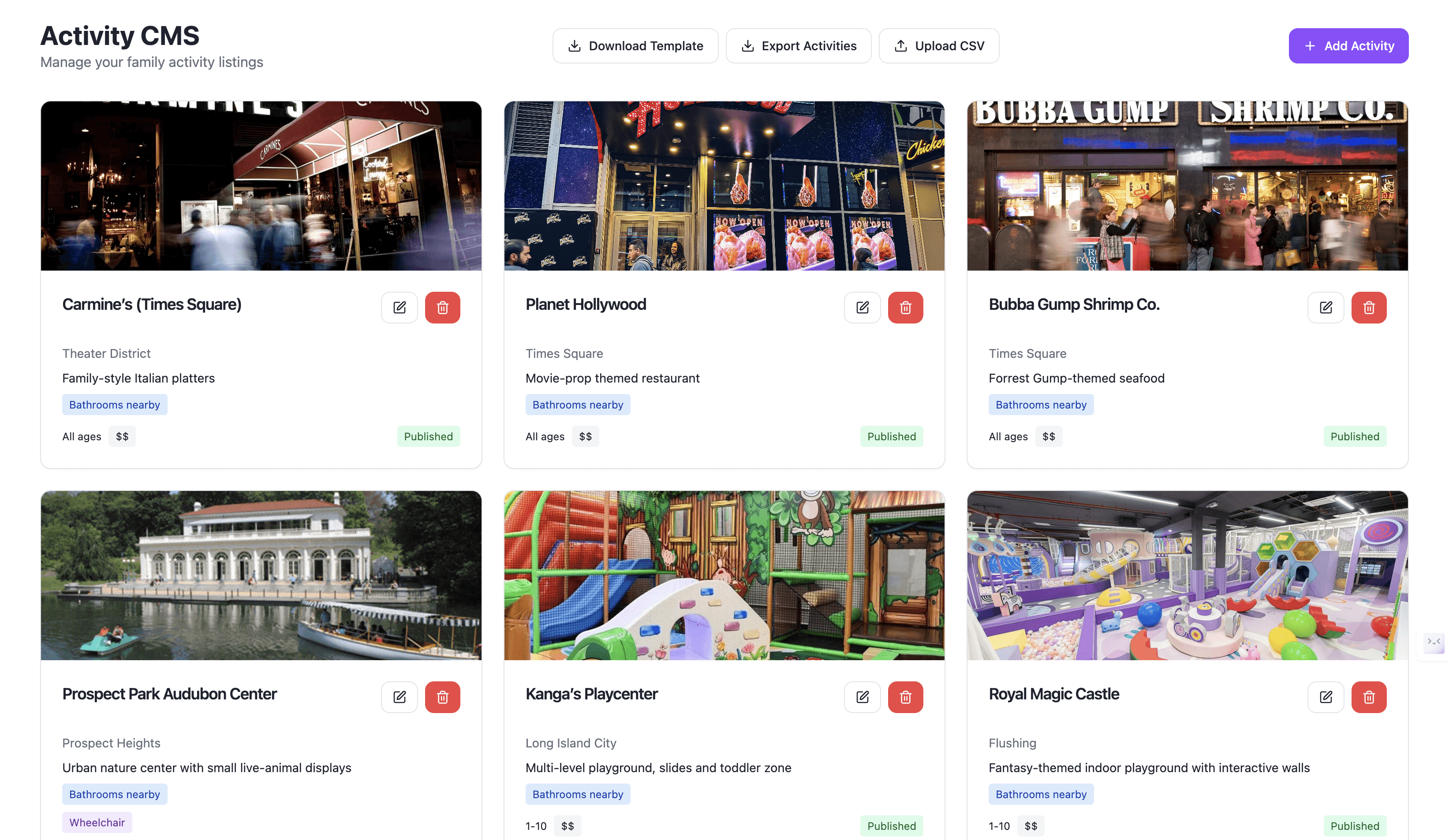
• Componentized listing cards that auto-update from the CMS
The result: a playground-finder that feels effortless on the surface but scalable underneath.
Visually, I leaned into Neo-Brutalism — bold colors, unapologetic type, and clear structure.
It’s kid-friendly but not childish. Think: MoMA meets the Children’s Museum. The logo and visual language reflect confidence, discovery, and belonging — for both kids and parents.
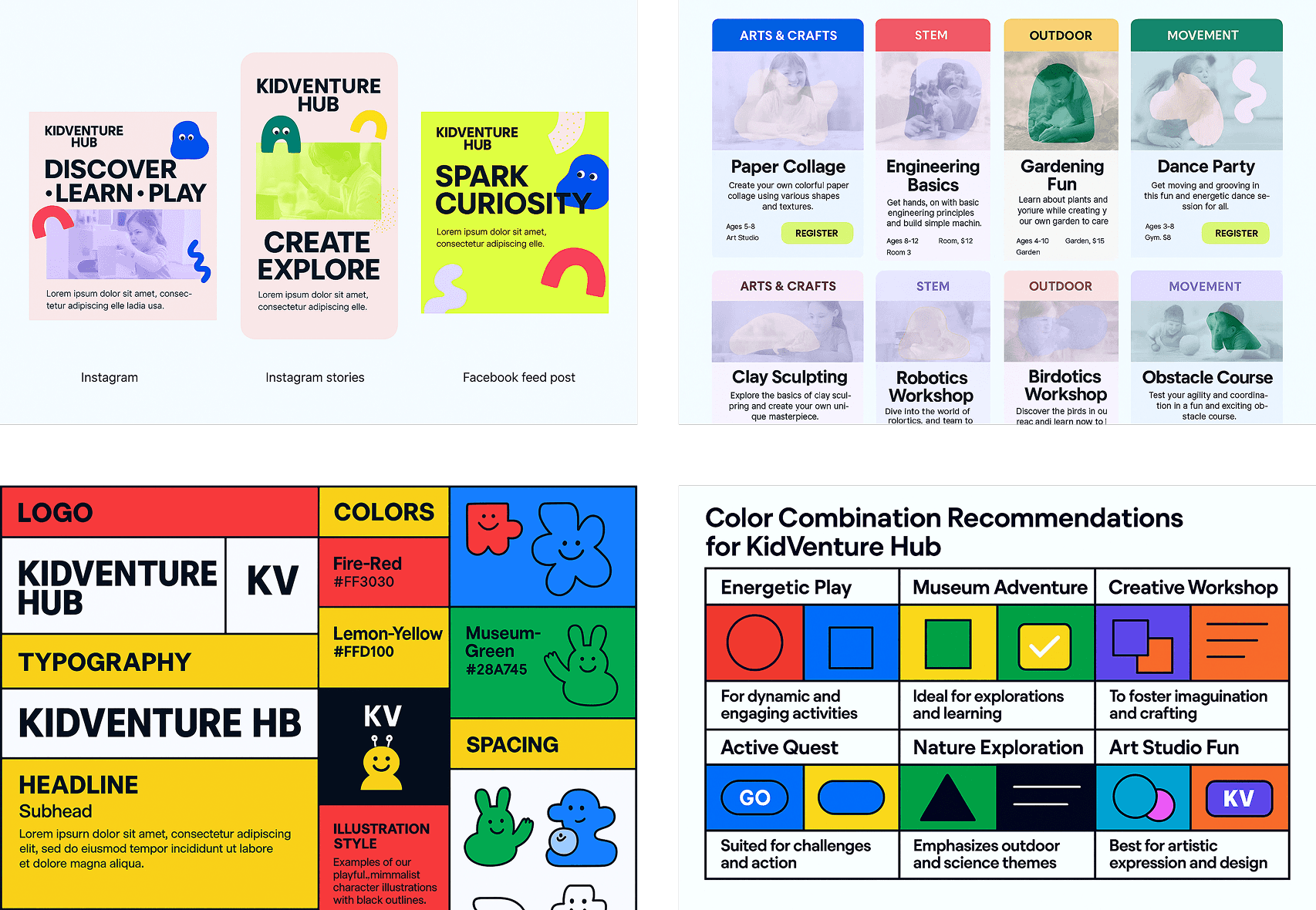
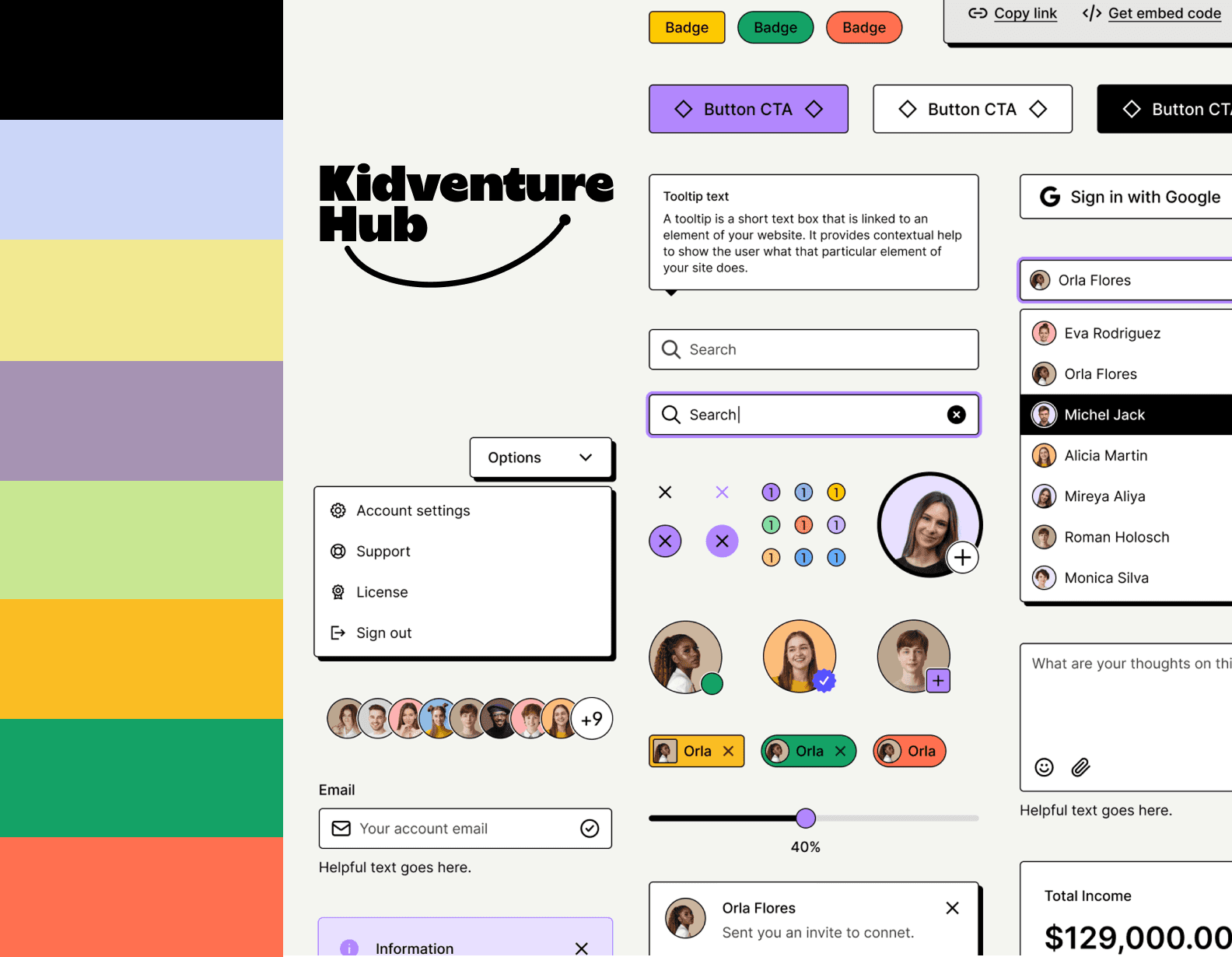
The MVP prototype now includes:
100+ curated spots across Brooklyn and Manhattan
Quick-scan cards showing essentials (bathrooms, playground type, nearby food)
Mobile-first responsive design
While not yet public, the app has become a living testbed for my AI + design workflow — blending intuitive visual design with real data systems. KidVenture Hub NYC reminded me why I love design — the intersection of creativity, clarity, and real-world usefulness. It taught me that “vibe coding” isn’t about chaos — it’s about following instinct to reveal structure.

" height="2.1187359513420594px" id="P5kIJB7Ko" transform="translate(4.268 0)" width="11.73219480873486px"/><path d="M 2.13 11.637 L 0 11.637 L 0 0 L 2.13 0 Z" fill="rgb(15, 14, 14)" height="11.636652122173734px" id="xBplekXaY" transform="translate(13.87 0)" width="2.1296344887445002px"/><path d="M 1.509 14.942 L 0 13.447 L 13.563 0 L 15.073 1.496 Z" fill="rgb(15, 14, 14)" height="14.94221869628454px" id="DEz5S9WYM" transform="translate(0 1.058)" width="15.072818848944806px"/></g></svg>)